What Westbard Square Bethesda Means for Westmoreland Hills
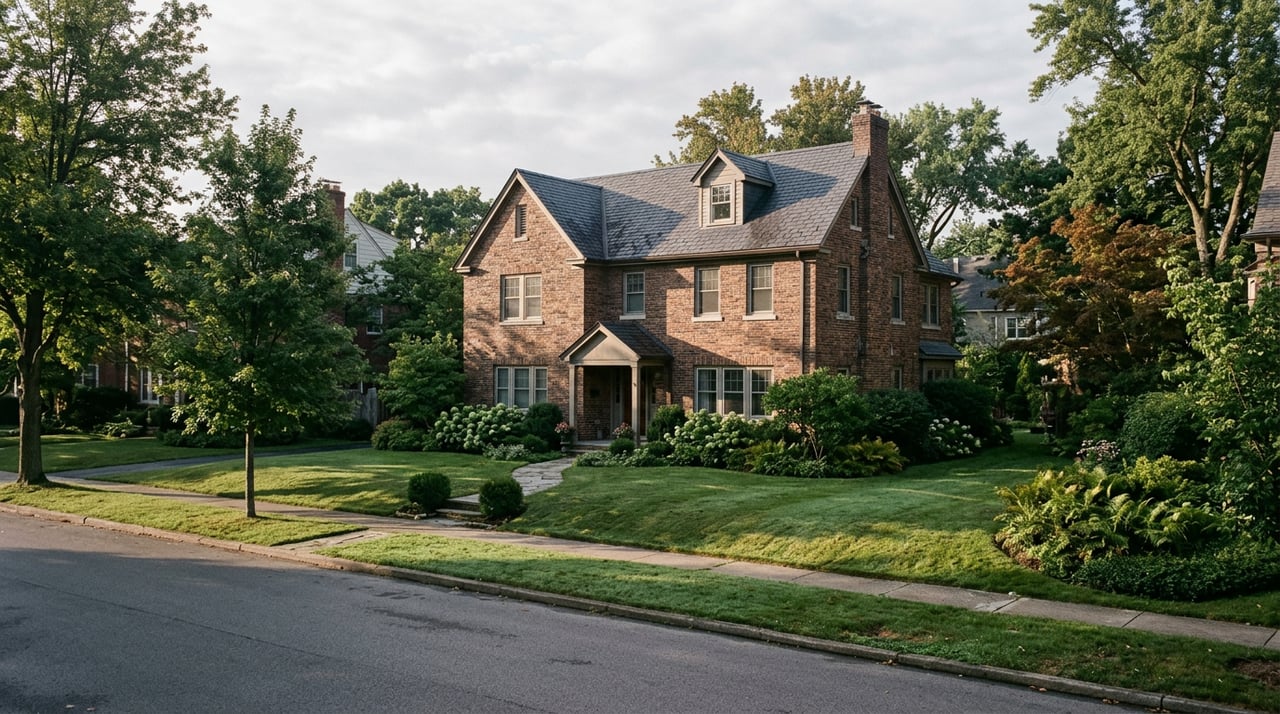
For most of the last decade, if you mentioned Westbard to someone who lives on the Maryland side of Westmoreland Circle, you got a shrug. A bakery was coming. A pizzeria was coming. Something was always coming, behind a chain-link fence, next to a parking lot that had been half torn up since before some residents' kids started middle school. The promise had been circling so long it stopped registering as news.
Then it actually happened. And while everyone was watching the fence line, something older sat unremarked a few blocks away, inside the neighborhood's own park, the whole time.
Westbard Square is the redevelopment of the old Westwood Shopping Center, a car-oriented strip built in the late 1950s and early 1960s that sat largely unchanged for half a century. Regency Centers bought the property in 2017 through a merger, though the site had been flagged for redevelopment for more than 20 years before that. The company's own account of the project calls it nearly a decade in the making, and anyone who has driven Westbard Avenue during that stretch would not argue.
Phase one is done now. A new Giant Food anchors it, alongside Starbucks, Tatte Bakery & Café, Silver & Sons BBQ, and a county-owned liquor store called Oak Barrel & Vine, an unusual detail for a private development and one that reflects how closely Regency worked with Montgomery County on the plan. The grand opening was a two-day event run with URBNmarket, the artisan market organizer known for pop-ups around the region, and it filled the new central green with cornhole, live music, and vendors selling everything from handmade preserves to dog treats.
Currently open or newly arrived at Westbard Square:
Piccoli Piatti belongs to Francis Namin, who opened his first Bethesda restaurant back in 1994 and now runs 11 in the area, including the fast-casual chain Fish Taco. Westbard offers surface parking rather than a garage, along with enough green space that a parent can let a kid run while waiting on a to-go order. Sense of Thai is still filling in behind him, one of the last announced tenants not yet open as of this writing.
Here is the part that generic neighborhood guides tend to miss, because it requires checking back rather than writing the story once and leaving it up. Developers told Montgomery County planners in May 2025 that construction on the next phase, a 200-unit multifamily building from Greystar, would start by the end of that year. It didn't. Shovels didn't actually hit dirt until this spring, when Montgomery Planning officials joined the development team to mark the groundbreaking in April 2026.
That phase brings roughly 200 more residential units, including 25 set aside as moderately priced homes, along with more than 23,000 additional square feet of retail. Somewhere in the county approval process, Greystar also trimmed nearly 19,000 square feet of commercial space from its original plan, trading one planned retail slot for changes to parking and loading access. The upshot for anyone walking the corridor today: what looks finished right now is closer to the halfway mark. The tenant roster on the ground so far, Giant, Tatte, Silver & Sons, is really phase one of two.
While all of that was under construction, something considerably older sat quietly inside Westmoreland Hills Local Park, the 10.1-acre park most residents already know for its playground, softball field, and two tennis courts. Montgomery Parks' own description of the site notes a prominent earthen mound on the property called Battery Bailey, built during the Civil War as a human-made hill to support cannons defending the reservoir that supplied Washington's water. It has been there the entire time anyone currently living in the neighborhood has lived there, unlabeled to most passersby, doing nothing more dramatic these days than holding its shape between the picnic tables and the multiuse field.
It fits how residents already describe the park, just from an angle nobody usually mentions. The Washington Post profiled the neighborhood in 2022 and quoted Ruth Van Voorhees, who walks her golden retriever there daily, saying the park "got me through covid" because so many neighbors leaned on it the same way during lockdown. Nobody in that piece brought up the cannon battery. It was simply the backdrop for a dog walk, the way it has been the backdrop for generations of dog walks, unremarked because it asks nothing of you unless you go looking.
That is the pattern worth noticing. Westmoreland Hills tends to hold its interesting details at arm's length until someone points directly at them, whether that's a bakery finally opening after nine years of fencing or a Civil War earthwork that has been sitting under the swing set the whole time.
None of this gets decided by the neighborhood alone, and none of it gets absorbed by the neighborhood alone either. That job belongs to the Westmoreland Citizens Association, which has organized civic life here since 1935 and now counts nearly 1,000 households across six member communities: Overlook, Spring Hill, Westgate, Westhaven, Westmoreland Hills, and Yorktown Village. Every household in those six areas is automatically a member. The WCA runs its own gathering space, a building residents call the Little House, funded in part by a modest annual due. Separately, a neighborhood association hosts an annual carnival every May, a much smaller, homegrown counterpart to the two-day commercial launch event a half mile away at Westbard.
That contrast says something true about how this place absorbs change. A national retail developer can spend nine years building a new grocery-anchored corridor next door, and the neighborhood will walk over, buy a coffee, and keep its own May carnival running on its own volunteer-run schedule regardless. Big infrastructure arrives on somebody else's timeline. The neighborhood's own institutions, the WCA and the Little House among them, run on their own clock, and have for nine decades.
Westmoreland Hills was never really landlocked the way it sometimes got described, a quiet pocket cut off from anything resembling a commercial strip. It was waiting on infrastructure that took its time, the same way the earthwork inside its own park took a war to get built and a century and a half to go unremarked. The corridor at Westbard just caught up to the rest of the story. The park already had one.
If you're weighing what a place like this means for your own next move, whether you're comparing it to another close-in Bethesda pocket or just trying to understand what changed while you weren't looking, Kathleen Fong Group knows this stretch of Maryland well enough to walk you through it block by block. Reach out when you're ready to talk specifics.
This article is general information, not legal, tax or financial advice. Consult a qualified professional about your situation.
October 22, 2026
October 15, 2026
October 8, 2026
October 1, 2026
September 24, 2026
September 17, 2026
September 10, 2026
September 3, 2026
August 27, 2026
We greatly appreciate the opportunity to help you with the major life decision. As a practice, we work tirelessly to bring transparency and sincerity to the home selling process and believe that having a united vision with our clients, is the key to a successful outcome. Our mission statement: We will treat your home as our own, share our knowledge and never compromise our ethics.
Get In Touch With Our Team To Learn More
Kathy Fong
Direct: (703) 927-1737
[email protected]
2111 Wilson Blvd., Suite #1050
Arlington, VA 22201
Licensed in DC, MD, VA, DE